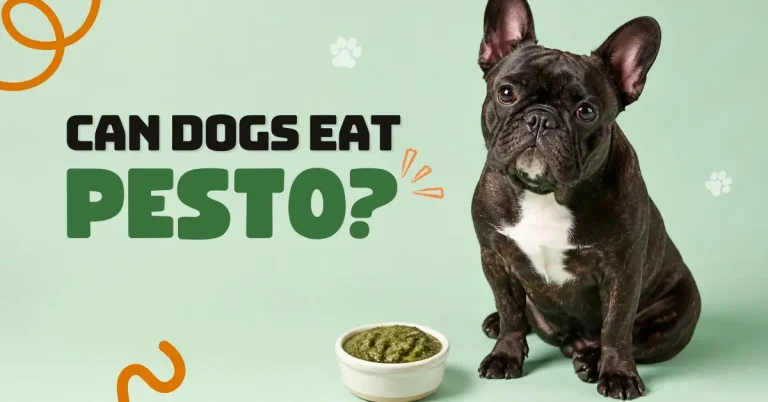
If you’ve ever enjoyed a plate of pesto pasta or a spoonful of fresh basil pesto, it is natural to wonder: Can I share this with my dog?
The short answer is no—dogs should not eat pesto. While it may seem harmless, pesto contains several ingredients that can be toxic or unsafe for dogs, even in small amounts.
This guide breaks everything down clearly—what’s in pesto, why it is risky, what to do if your dog eats it, and safe alternatives you can offer instead.
What Is Pesto Made Of? Key Ingredients!
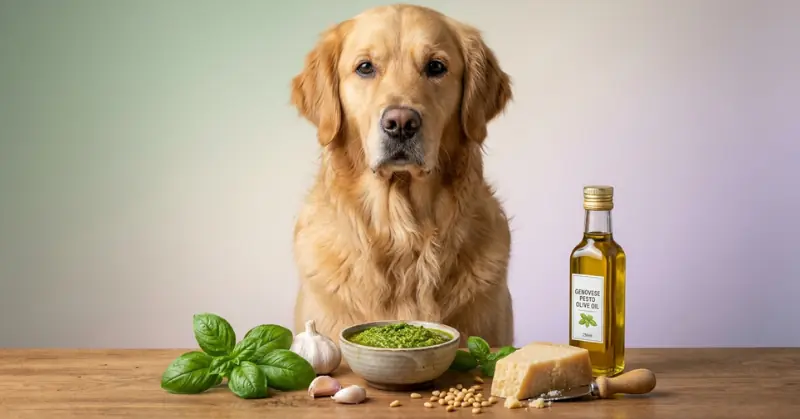
Pesto is a traditional Italian sauce, most famously known as pesto alla Genovese. It has a rich, aromatic flavor and is commonly used in pasta, sandwiches, and marinades. The classic recipe typically includes:
- Fresh basil: The main herb that gives pesto its vibrant green color and fresh aroma
- Garlic: Adds a strong, savory kick (but is harmful to dogs)
- Pine nuts: Provide a creamy texture and nutty flavor
- Olive oil: Binds everything together and makes the sauce smooth and rich
- Parmesan cheese: Adds saltiness and depth of flavor
- Salt: Enhances taste but increases sodium content
While this is the traditional version, many store-bought and homemade variations exist. Some recipes substitute or add ingredients like:
- Walnuts, cashews, or almonds instead of pine nuts
- Spinach, kale, or arugula, along with or instead of basil
- Sun-dried tomatoes (in red pesto)
- Extra preservatives or flavor enhancers in packaged versions
The important thing to understand is that pesto is not a single fixed recipe—but nearly all versions contain a mix of high-fat ingredients and garlic, which makes them unsuitable for dogs.
Read more: What Are Tamales Made Of?
Why Pesto Is Not Safe for Dogs?
Here is why you shouldn’t give pesto to your canines:
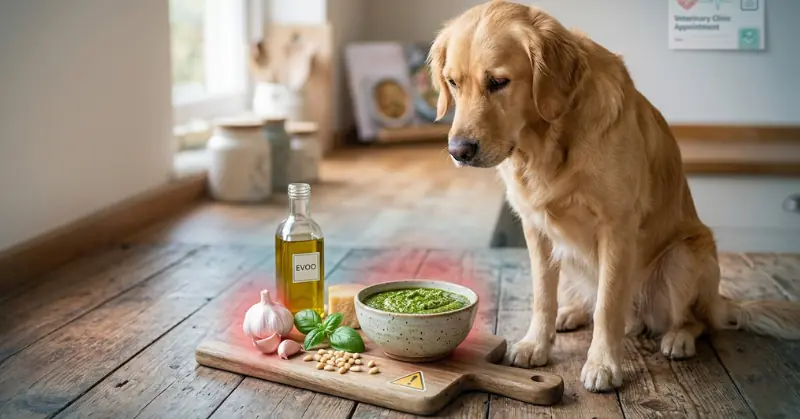
1. Garlic Is Toxic to Dogs (Main Danger)
Garlic belongs to the allium family (like onions), which is toxic to dogs.
- It contains compounds like thiosulfate that damage red blood cells
- This can lead to hemolytic anemia, a serious condition
Symptoms of Garlic Toxicity
- Weakness or lethargy
- Pale gums
- Rapid breathing
- Vomiting or diarrhea
- Dark urine
Even though large amounts are usually needed for severe poisoning, small repeated doses can still be harmful. Since pesto almost always contains garlic, it is considered unsafe by veterinary sources.
2. High Fat Content
Pesto causes digestive issues, as it is rich in:
- Olive oil
- Cheese
- Nuts
These are high-fat ingredients, which can cause:
- Upset stomach
- Diarrhea
- Pancreatitis (in severe cases)
Dogs don’t process fatty human foods the same way humans do.
3. Too Much Salt
Salt isn’t toxic in tiny amounts, but pesto can contain excess sodium, which may lead to:
- Dehydration
- Increased thirst
- Electrolyte imbalance (if consumed in large quantities)
4. Nuts Can Be Problematic
While pine nuts aren’t toxic like some nuts, they can still cause issues:
- High fat → stomach upset
- Possible allergies
- Some pesto variations may contain walnuts or other nuts, which are harder for dogs to digest
Also read: What Nuts Can Dogs Eat?
5. Cheese (Lactose Issues)
Many dogs are lactose intolerant. Cheese in pesto can cause:
- Gas
- Bloating
- Diarrhea
Are Any Pesto Ingredients Safe for Dogs?
Yes—some individual ingredients are safe in isolation, as shown in the table below.
| Ingredient | Safe for Dogs? | Note |
| Basil | Yes | May have anti-inflammatory benefits in small amounts |
| Pine nuts | Limited | High fat—only occasionally |
| Olive oil | Limited | Small amounts are okay |
| Cheese | Limited | Avoid if lactose intolerant |
| Garlic | No | Toxic |
So while parts of pesto are safe, the full recipe is not.
What About Different Types of Pesto?
Many dog owners assume that certain types of pesto might be safer than others—especially homemade or “healthier” versions. Unfortunately, most pesto variations still contain ingredients that aren’t suitable for dogs. Let’s take a closer look at the most common questions:
Can Dogs Eat Basil Pesto?
No. Basil pesto is the classic version most people think of. While basil itself is safe for dogs in small amounts, basil pesto almost always includes garlic, oil, cheese, and nuts. Even homemade versions usually contain at least one harmful ingredient. So, despite sounding natural, basil pesto is not safe for dogs.
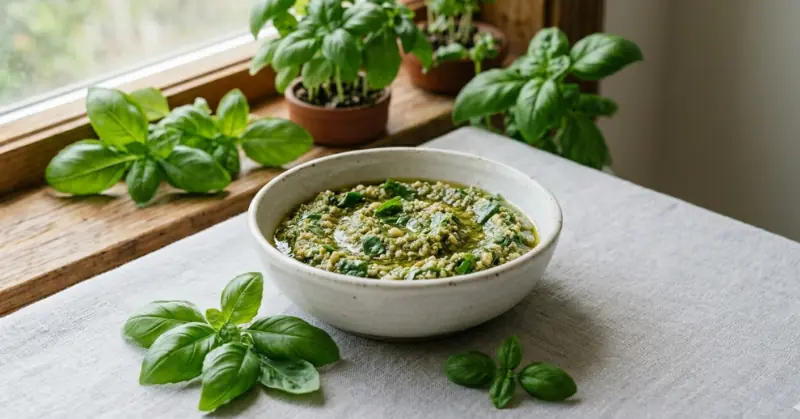
Can Dogs Eat Green Pesto?
No. Green pesto is typically just another name for traditional basil pesto. Some recipes may include spinach, kale, or other greens—but they still commonly contain garlic and high-fat ingredients. Even if it looks “healthier,” green pesto is still unsafe for dogs.
Can Dogs Eat Red Pesto?
No. Red pesto (often made with sun-dried tomatoes) may seem like a different option, but it is not any safer. It usually contains:
- Garlic
- Olive oil
- Cheese
- Sometimes chili or spices
These ingredients can irritate your dog’s stomach or worse, making red pesto a poor choice.
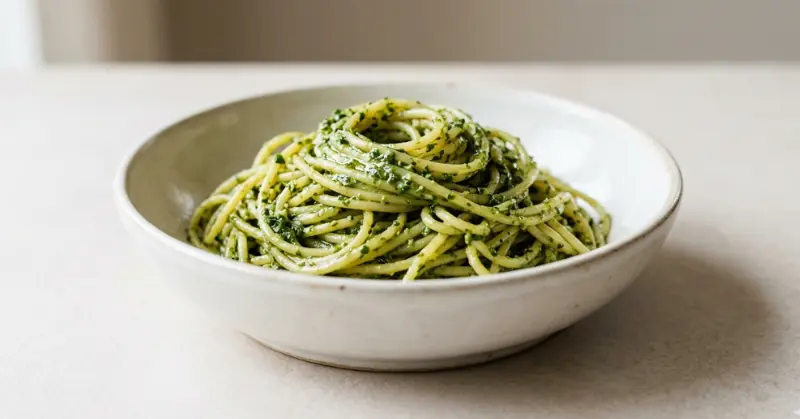
Can Dogs Eat Pesto Pasta?
No. Pesto pasta combines two issues:
- The pesto sauce (unsafe)
- Refined carbs from pasta (not harmful, but not beneficial either)
While plain pasta in small amounts is okay, pesto-coated pasta should be avoided completely.
Can Dogs Eat Pesto Chicken?
No Chicken alone is a great, dog-safe protein—but once it is coated in pesto, it becomes risky. The sauce introduces garlic, fat, and seasoning that can upset your dog’s system.
Plain chicken = safe
Pesto chicken = not safe
Can Dogs Eat Pesto Noodles?
No.Similar to pesto pasta, noodles covered in pesto carry the same risks. Even a small serving can expose your dog to garlic and excess fat. It is best to stick with plain noodles only, and only occasionally.
What Happens If Your Dog Eats Pesto?
Accidents happen—maybe your dog grabbed a bite off your plate or licked a spoon.
Symptoms to Watch For
Common mild symptoms of eating pesto include:
- Vomiting
- Diarrhea
- Loss of appetite
Serious symptoms usually show up due to garlic toxicity, as given below.
- Lethargy
- Pale gums
- Rapid heart rate
- Weakness
What Should You Do?
- Stay calm and assess the situation
- How much did your dog eat?
- What type of pesto was it?
- Monitor for symptoms: Watch your dog closely for 24-48 hours.
- Contact a vet if your dog:
- Ate a large amount
- Shows unusual symptoms
- Shows unusual tiredness or weakness
- Has vomiting or diarrhea
- Has pale gums or rapid breathing
- Is small, elderly, or has health issues
Important Note: When in doubt, it is always safer to call a vet. Experts recommend contacting a vet whenever garlic ingestion is suspected.
If your dog is pregnant(link to this page once it’s live)or you suspect breeding, try our Dog Pregnancy Calculator to estimate the due date and prepare in advance. It uses the average 63-day gestation period to give you a reliable timeline for your dog’s delivery and care planning.
Real-World Example
A common scenario:
A dog owner leaves a plate of pesto pasta on the table. The dog sneaks a few bites. Within hours, the dog starts vomiting and becomes lethargic.
In many such cases, the issue is not immediate poisoning, but digestive distress from fat and garlic exposure. Some dogs recover quickly, but others require vet care—especially if symptoms worsen.
Curious about your dog’s real age in human years? Our Dog Age Calculator helps you better understand your dog’s life stage and health needs for smarter care decisions.
Safe Alternatives to Pesto for Dogs
Just because pesto isn’t safe doesn’t mean your dog has to miss out on tasty, flavorful treats. If you enjoy sharing food moments with your pet, there are plenty of dog-friendly alternatives that mimic the freshness of pesto—without the harmful ingredients like garlic, excess fat, or salt.
The key is to focus on simple, whole ingredients that are safe for dogs while still adding a bit of variety to their meals. Here are some better options:
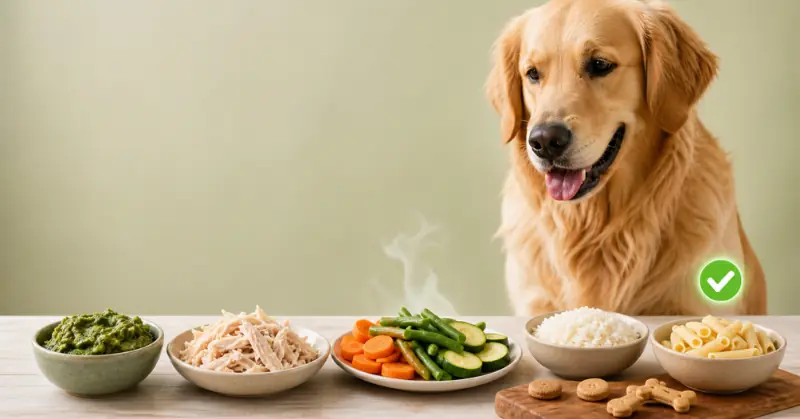
1. Dog-Safe Pesto (Homemade Version)
You can create a mild, pet-friendly version of pesto at home using:
- Fresh basil (in small amounts)
- Parsley
- A splash of water or plain, unsweetened yogurt
- Optional: a tiny amount of olive oil
Avoid garlic, onions, nuts, salt, and cheese. Blend these ingredients into a light paste and serve a small amount as a topper on your dog’s regular food.
2. Plain Cooked Chicken
Simple and highly digestible, plain chicken is a great alternative when you want to add flavor:
- Boiled or grilled (no seasoning)
- Shredded into small pieces
- Mixed with regular kibble
It is a safe way to make meals more exciting without risking your dog’s health.
3. Steamed Vegetables
Certain vegetables can add both nutrition and texture:
- Carrots
- Green beans
- Zucchini
Lightly steam them and serve plain. These are low in fat and easy on the stomach.
4. Plain Rice or Pasta (Occasional Treat)
If your dog enjoys carbs, small amounts of:
- Plain white rice
- Plain boiled pasta
can be given occasionally—just without sauces like pesto.
5. Commercial Dog Treats with Natural Flavors
Many high-quality dog treats are designed to be both safe and flavorful. Look for options made with:
- Real meat
- Vegetables
- Limited ingredients
These can satisfy your dog’s taste buds without the risks associated with human foods.
You may also want to read the best homemade dog food recipes for kidney disease.
Can Dogs Eat Garlic-Free Pesto?
Technically, yes—but with caution. If you make a dog-friendly pesto without garlic:
- Use basil + small amounts of olive oil
- Skip salt and cheese
- Avoid large quantities
Even then, it should only be an occasional treat, not a regular food.
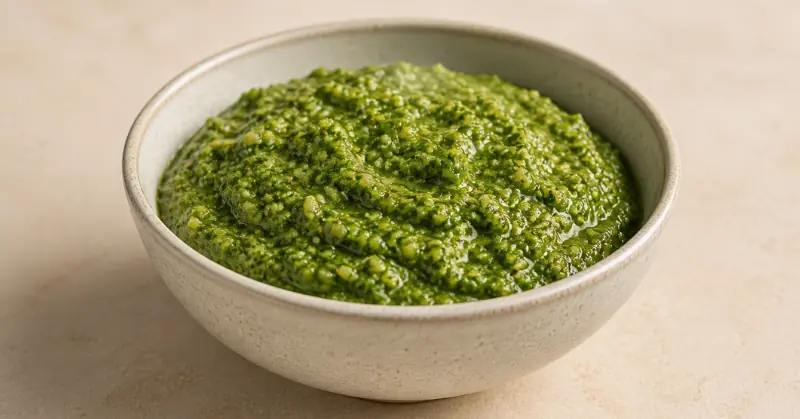
How to Feed Dog-Safe Pesto to Your Dog?
When feeding safe Pesto to dogs, remember that it must be done in moderation and as part of a balanced diet. Here are some ideas for feeding Pesto to your dogs.
1. Select a Pesto Suitable for Dogs
Not all are ideal, particularly those containing onions, garlic, or other harmful elements. Stick to homemade Pesto recipes designed specifically for dogs, or look for commercial Pesto created with dog-safe ingredients.
2. Introduce Pesto Gradually
If this is your dog’s first time trying homemade pesto, start with a small amount and see how they react. Some dogs may be sensitive to new meals and develop digestive issues such as vomiting or diarrhea.
3. Mix with Regular Food
Instead of providing pesto separately, mix it with your dog’s usual food to give flavor and diversity. This will also keep your dog from overeating the pesto.
4. Serve Pesto as an Occasional Treat or Snack
Pesto is good as an occasional treat or snack for your dog. You can spread it with a dog-friendly biscuit, cracker, or dip for dog-friendly vegetables or meat.
5. Keep an Eye on Quantity Sizes
While dog-safe pesto can be a nutritious supplement to your canine’s diet, it should be used sparingly. It can cause stomach troubles and weight gain if consumed in excess, so keep portion amounts in check and only use it occasionally as a treat.
Note: Always contact your veterinarian before adding new items to your dog’s diet, especially if they have any pre-existing health concerns or dietary restrictions.
Why Dogs React Differently to Pesto Than Humans?
Dogs process food very differently from humans, which is why something like pesto can be harmful to them.
- Different metabolism: Dogs lack certain enzymes needed to safely process compounds like those found in garlic, which can damage red blood cells.
- Higher sensitivity to toxins: Even small amounts of harmful ingredients can affect dogs more due to their body size and weight.
- Digestive differences: Dogs have shorter digestive systems, making it harder to handle rich, fatty, or heavily seasoned foods.
- Fat intolerance: High-fat foods (like pesto) can quickly cause stomach upset or even pancreatitis.
- Limited dietary adaptability: Dogs thrive on simple diets, so complex human foods can disrupt their system.
In short, what’s safe for humans isn’t always safe for dogs due to key differences in metabolism, digestion, and overall tolerance.
What Human Food Can I Offer My Dog?
Here are safe human foods dogs can generally eat safely in moderation:
- Plain cooked chicken (no salt, spices, or oil)
- Lean beef (boiled or lightly cooked, unseasoned)
- Plain rice (white or brown, fully cooked)
- Pumpkin (plain, cooked, or canned without sugar/spices)
- Apples (no seeds or core)
- Sweet potato (cooked, plain)
- Plain yogurt (unsweetened, in small amounts if lactose-tolerant)
- Bananas (small amounts)
- Cooked eggs (boiled or scrambled without butter/oil)
- Plain turkey
- Cucumber (fresh and hydrating)
- Carrots (raw or steamed)
- Green beans (plain and cooked)
- Blueberries (safe and antioxidant-rich)
- Plain pasta (no sauces like pesto or tomato-based seasoning)
For more details, read our comprehensive guide on what human food can dogs eat?
Takeaway
It is completely normal to want to share your food with your dog—but not all human foods are safe, and pesto is one of those that’s best avoided.
If you remember one thing, let it be this: Pesto isn’t worth the risk, even in small amounts. When in doubt, stick to simple, dog-safe foods. Your dog may not know the difference—but their health definitely will.
Expecting puppies soon? Use our Dog Name Generator to discover creative and unique name ideas for your new furry family members in seconds.
Frequently Asked Questions (FAQs)
Q: Can dogs eat pesto sauce?
A: No, dogs should not eat pesto sauce. It typically contains garlic, which is toxic to dogs, along with high-fat ingredients like oil and nuts that can cause digestive upset or even pancreatitis. Even a small amount isn’t recommended. It is best to avoid pesto entirely and stick to dog-safe foods.
Q: Is pesto dog friendly?
A: No, pesto is not dog-friendly. Even though basil itself is safe, the full pesto recipe includes ingredients that make it unsuitable for dogs.
Q: Can dogs eat basil or pesto?
A: This is where confusion often happens.
- Basil: Safe in small amounts
- Pesto: Unsafe due to added ingredients
So yes—dogs can have a little plain basil, but not basil pesto.
Q: Can dogs eat Pesto with chestnuts?
A: No, it is still not recommended. Even if chestnuts themselves are safe in small amounts, pesto often contains garlic, salt, and oils, which can be harmful or cause digestive upset in dogs.
Q: Does Pesto help in preventing hair fall in dogs?
A: No. Pesto is not a suitable or effective solution for hair fall. While ingredients like olive oil may support skin health, pesto as a whole is not safe or beneficial for treating shedding or coat issues.
Q: Can a Maltese dog eat pesto?
A: Definitely not recommended. Small breeds like Maltese dogs are more sensitive to:
- Fat content
- Toxic ingredients
- Portion size
Even a small amount can cause noticeable symptoms.
Q: Can I give Pesto to a newly born puppy?
A: Absolutely not. Puppies have very sensitive digestive systems, and pesto—especially with garlic and fats—can be dangerous and hard to digest. Stick to a proper puppy diet recommended by a veterinarian.